
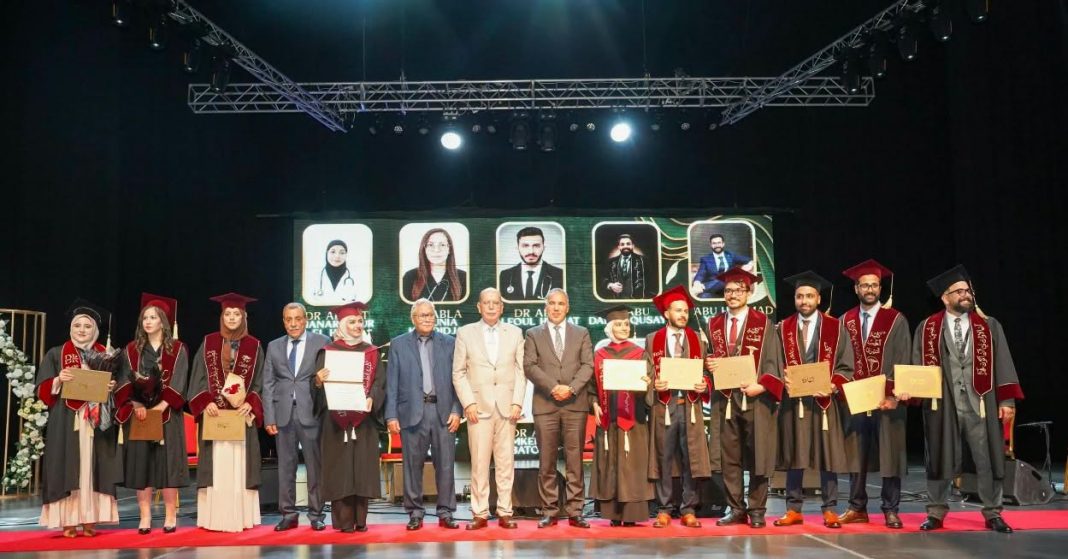

At the Faculty of Medicine of the University of Constantine 3 “Saleh Boubnider,” the Class of 2019-2026 has officially entered the profession, just days before the national residency exam.
Seven years of coursework, hospital placements and night shifts reached their culmination on Thursday. In the Zénith’s grand Ahmed Bey Hall, 810 students from the Class of 2019-2026 at the University of Constantine 3 “Saleh Boubnider” Faculty of Medicine took the medical oath, becoming fully qualified doctors in a ceremony steeped in solemnity.
A Ceremony rich in meaning
The ceremony was attended by the wali of Constantine, Kamel Eddine Kerbouche, alongside civil and military officials, the president of the Regional Council of Medical Ethics, members of parliament and numerous faculty researchers.
After a recitation of Quranic verses and the national anthem, a series of speeches followed: words of encouragement from the Council of Medical Ethics, addresses by the university rector and the dean of the faculty, and remarks from representatives of both Algerian and international students.
The highlight came when the president of the Council of Medical Ethics led the young practitioners in the collective reading of the medical oath. This solemn pledge binds them to practice with respect for ethics, human dignity and devotion to the patient. Rooted in the Hippocratic Oath and adapted to both universal and national values, the ritual is far more than a formality: it marks the passage from student to practitioner and reminds all present that medicine is, above all, a vocation in the service of society.
The crowning of a demanding journey
Now a fixture at medical faculties across the country, the ceremony also honors the collective effort of students, families, teachers and hospital supervisors, whose combined commitment produces doctors ready to step straight into the field.
On to the residency exam
For these young graduates, the celebrations will be short-lived. Starting next week, they will sit the national residency exam, the mandatory gateway to specialization. Dreaded yet unavoidable, this competitive exam will determine who goes on to train as a resident physician in surgery, pediatrics, cardiology, internal medicine and many other disciplines.
The stakes reach well beyond academia. Algeria’s healthcare system needs qualified specialists to meet the population’s growing needs and to rise to the challenges of hospital modernization.
Between pride and responsibility
The ceremony closed with the presentation of awards to the top graduates, who were congratulated by the authorities and their professors. Special mention went to Dr. Youcef Merazga, valedictorian of the class.
If joy and pride shone on the faces of the new doctors and their families, the responsibility awaiting them was just as palpable. Behind the applause and the camera flashes, each graduate grasped the gravity of the commitment made: to heal, to listen, to protect life.
Through a ritual that blends tradition, recognition and rigor, the university reminded everyone that medicine is not merely a science, but above all a pledge of faithfulness to humanity.